Every Pokémon is weak to something. That’s fine. A team gets beaten when the same attack type hurts several of your Pokémon and nobody on the team can take that hit. Covering your weaknesses means making sure that, for every attack type, at least one teammate can switch in and shrug it off.
All the numbers here use the current type chart, the one with Fairy.
The four words you need
- Weak means the attack does double damage (2×). If both of a Pokémon’s types are weak to it, the damage doubles twice, to 4×.
- Resists means the attack does half damage (½×), or a quarter (¼×) when both types resist it.
- Immune means the attack does nothing at all (0×).
- Neutral means normal damage. A weakness and a resistance cancel out to neutral.
So covering a weakness is simple: next to each Pokémon that is weak to a type, put a Pokémon that resists that type or is immune to it.
Step 1: Find the weaknesses that stack
Look at this team: Charizard, Gyarados, Dragonite and Garchomp. Four strong Pokémon. Now look at what hits them.
- Rock hits Charizard 4×, and Gyarados and Dragonite 2×. Three of four are weak to it. Only Garchomp resists it.
- Ice hits Dragonite and Garchomp 4×. Charizard and Gyarados take normal damage. Nobody resists it.
- Electric hits Gyarados 4× and Charizard 2×. Garchomp is immune, which saves the day.
One weakness on one Pokémon is normal. The same weakness on three Pokémon is a problem, because one Rock move can knock out most of your team. And Ice is worse: it hits two of them hard and nobody resists it. That’s a gap, and gaps lose battles.
Step 2: Fix 4× weaknesses first
A 4× weakness usually means one hit and your Pokémon is out. Some famous ones:
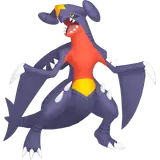 GarchompDragonGround
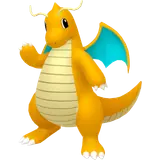 DragoniteDragonFlying
 GyaradosWaterFlying
 CharizardFireFlying
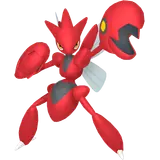 ScizorBugSteel
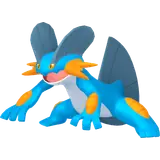 SwampertWaterGround
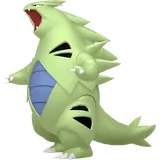 TyranitarRockDark
- Garchomp and Dragonite: 4× weak to Ice.
- Gyarados: 4× weak to Electric.
- Charizard: 4× weak to Rock.
- Scizor: 4× weak to Fire.
- Swampert: 4× weak to Grass.
- Tyranitar: 4× weak to Fighting.
For each 4× weakness on your team, you want a teammate that resists that type. For our team, Ice is the big one. Only four types resist Ice: Fire, Water, Ice and Steel. So the fix is a Pokémon with one of those types.
Step 3: Pick a partner that covers back
The best partners cover each other. Garchomp and Scizor are a classic pair:
- Garchomp is weak to Ice, Dragon and Fairy. Scizor (Bug / Steel) resists all three.
- Scizor is 4× weak to Fire. Garchomp resists Fire.
Each one takes the hits the other can’t. You can see the same idea in the starter types: Fire resists Grass, Water resists Fire, and Grass resists Water. Three types that cover each other’s main weakness in a circle.
Adding Scizor to our team also helps the whole six. Charizard, Gyarados, Dragonite and Garchomp all resist Fire, so Scizor’s one big weakness is covered four times over.
Step 4: Use immunities
An immunity is the best cover there is, because your Pokémon takes no damage at all. These are worth remembering:
- Ground is immune to Electric.
- Flying is immune to Ground.
- Ghost is immune to Normal and Fighting.
- Normal is immune to Ghost.
- Dark is immune to Psychic.
- Steel is immune to Poison.
- Fairy is immune to Dragon.
That’s why Garchomp and Gyarados work well together even though they don’t share a type. Gyarados is 4× weak to Electric, and Garchomp is immune to it.
Step 5: Check the whole team
Don’t stop after one fix. Each new Pokémon brings its own weaknesses. A quick check for any team:
- Count the 4× weaknesses. Each one needs a teammate that resists that type.
- Look for any type that hits three or more of your Pokémon. Add a Pokémon that resists it, or swap one of the three.
- Find the gaps. A type that hits someone hard and that nobody resists is the most urgent fix.
- Check again after every change.
You don’t have to do this by hand. Put your Pokémon in the team builder and it shows every type your team is weak to, marks the gaps as “no answer”, and suggests Pokémon that fill them in the game you’re playing. If you want to look up one type pair, the type chart shows its weaknesses, resistances and immunities in one place.